Wandering Son by Takako Shimura
We didn't read this for class but I read it earlier this year when I went on a small graphic novel binge. I really think this book has a lot of potential for being a good piece of children's literature that has trans* protagonists (!!! plural!) and is entertaining and warm on its own merits, rather than hyperfocusing on the Issue. Wandering Son is about a boy who wants to be a girl, who meets and eventually befriends a girl who wants to be a boy. It's charming and I HIGHLY recommend it.

Another reason it appeals to me is that I think it's an example of manga that has significant crossover appeal for adults, which seems counterintuitive in some ways--why should I care that it appeal to adults, after all! But the art and the story have this understated elegance, and it really gets across in what feels to me to be an authentic depiction of childhood that dissonance between the mundane concerns of family and school and fitting in and this giant, consuming secret that these kids don't feel like they can talk to anyone about. It handles adolescent friendships really well, too. The art is often stark, the dialogue and narration spare, and it really feels like a book full of silences, while still feeling hopeful and engaged--the silence is not desolate, it is far more complex than that. The expressions conveying Shuichi's (nonverbalized) emotions about the gift of feminine hairclips from a classmate who reacts well to learning part of his secret, the way the genderswapped production of the Rose of Versailles in the kids' school reflects on their moments of difficulty and their desires and fears, as well as social interactions. I'm really looking forward to future volumes.
Also, because I'm a bookseller, I notice things like packaging. This book is being produced in America by Fantagraphics, who tend to do alternative-esque, tending more toward literary comics and graphic novels for an adult audience. The packaging reflects that, with its avant-garde typesetting on the cover, the fact that it is bound in high-quality hardcover format, the striking color against a black-and-white background. I am hoping this title wins awards, and I think it's an excellent choice to give to young people who ask for resources on gender identity. It confronts identity head-on without ignoring other aspects of a child's life, and the art is approachable and comforting. I'm glad to see manga of this literary quality to round out the more popular manga we see so much of (not that there's anything wrong with that! But it's good to have variety).
Technology and self-driven learning
I am still pretty proud of the vid I made for my website design project, I'm not going to lie. I think the process of learning a technology for a specific purpose and with a sense of play attached, while having a firm deadline to motivate work and reduce tinkering was really good for me.
I want to think about the kinds of technologies I used to make that piece, and how I learned to use those technologies and what community conventions helped frame my approach. It's interesting because one of the articles I'm considering using with my final paper is resonating with what the actual experience of creating this fanvid was about. Right now I'm reading ""Tech-savviness" meets multiliteracies: Exploring adolescent girls' technology-mediated literacy practices", an article by Kelly Chandler-Olcott. In the first part of the paper, before the case study research discussion, she discusses how theorists have to think about the use of technological tools in specificity within their context, arguing "The use of particular technological tools [....] mediates participants' pursuit of particular outcomes as well as construction of various identities." I think, in terms of the sophistication and possibilities offered by a technological tool, as well as the ways mentors stamp their preferences on people they teach to use a certain tool, those minor interactions and possibilities and limitations really get shaped by the tool, that technology provides a huge amount of structure for the shapes of communities. I think that's true offline, as well, but particularly true in online communities.
Just thinking about the kinds of software and online platform tools I used in that vid--I used firefox, safari, megaupload, handbrake, livejournal, mpeg streamclip, twitter, gmail chat, imovie (until I abandoned it because all of my mentors were familiar with Final Cut), garageband, itunes, final cut express, mediafire, VLC media player, Avatar fansites and wikis, youtube, UW webspace, and my mac's OS and native finder tools. Some of those tools (livejournal, twitter, fansites and wikis) were to facilitate content information that helped me make decisions about the vid. Some were more accessing tools that helped me acquire source and export works in progress and the final version (megaupload, itunes, UW webspace, mediafire, youtube). Some of these were to help me get technical support on using the software and help me work through technical problems (gchat, twitter). Many were to help me manipulate the files and cut them into appropriate pieces, change their file type, and allow me to reassemble hundreds of pieces into a self-determined whole (VLC, MPEG Streamclip, Handbrake, Final Cut, iMovie, Garageband). Others allowed me meta-acess to the programs and sites I needed (my mac's OS, firefox, safari).
I learned almost all of these tools within social contexts. I learned all of them--even ones that seem so normal and ubiquitous now, like my strong preference for Firefox over Safari, came from social interactions in which I was encouraged to try the tool in question, had enough about it explained to me by a mentor until I could use it well enough for whichever purpose, whether that was making a podcast or converting a video to use on my ipod or something as complicated as making a vid. All of those aggregate small interactions have strengthened and built my portfolio of technological tools until I was comfortable enough with enough of them to attempt something as sophisticated and painstaking as vidding. I could never have made a vid if all I had had to work with was a formal workshop on iMovie--though I think that could work for some people who are more solitary learners than I am.

(Screenshot of Final Cut with my project vid open and clips assembled on the timeline in finished order)
Anyhow, I don't have a lot of conclusions except that I like research that explicitly acknowledges informal learning practices and community-centered engagement with technology. I certainly think there's a place for formal instruction into technology, but I also know that, at least in my own experience, I tend to have a better grasp of tools if I learn them through a mixture of trial-and-error and mentoring, and I only feel truly conversant with something if I am assisting others in learning it as well and taking on a mentoring role. I tend to think having an element of play adds a sense of accomplishment, too.
Bluefish by Pat Schmatz and Same Sun Here by House and Vaswani
I just finished Bluefish by Pat Schmatz today on my lunch break. I picked it up because she read at the book festival, and I've seen some positive reviews in a few places.
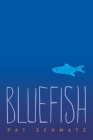
It's one of those books where the description on the book flap is annoyingly cagey about what the book is actually about, even though the protagonist's 'secret' is revealed fairly early on. The description on the website is a bit more forthcoming, though. SPOILER: it's about a poor kid, Travis who's functionally illiterate. His grandpa is his primary caregiver and they've just moved to a new town. He is in mourning for the dog who was his closest companion and vanished, distrusts his grandpa's attempts to sober up, and has some anger issues. He meets a girl named Velveeta who lives in the trailer park and who has also recently suffered a loss, in her case the older man who lived in a neighboring trailer and who mentored and encouraged her where her screw-up mother never did.
The story is well paced and does a really good job of getting into the heads of both Travis and Velveeta. They both work as characters and their mistakes and miscommunications feel so natural, as does Schmatz's work showing Travis's difficult slog toward literacy. He has an inspiring teacher, yes, but that teacher has to do a lot of work to break through his shell and he never totally trusts him, though he does come to respect his teaching. I also liked that this book dealt with the issue of peers teaching one another, and that process didn't go smoothly. There were a few notable moments where Velveeta attempts to teach Travis and her approach hits some of his buttons, shutting him down and making him angry.
Schmatz really got well into the different ways each of these characters experience and respond to being poor. Travis's home life with his (recovering) alcoholic grandfather, and the extremely barbed relationship they have, was particularly interesting. Velveeta's family were a little harder to puzzle out, partly because her perspective came from diary entries addressed to a recently deceased father-ish figure. Because she's writing to someone who knows her family situation, she doesn't explain who most of them are, so that was confusing.
I also read Same Sun Here by Silas House and Neela Vaswani, which is a YA novel coming out in February (I snagged an advance reading copy).
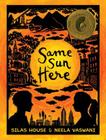
I really liked it, even though I'm not usually very fond of epistolary books. This one is constructed entirely in letters exchanged between Meena, a young Indian immigrant living in New York City, and her pen pal River Justice, a poor coalminer's son living in Kentucky. I think the book tried a little too hard to hit on too many Issues in their personal lives--both having absent fathers who have to live elsewhere to work, River's mother's mental health problems, Meena's family's difficulties with immigration and her family's illegal housing situation in a rent-controlled home with a nasty landlord. But those details, while making the story busy, also really made each character's context come alive and their feelings mattered on a subjective level. The narrative did a good job of situating and humanizing these very different kids, finding resonances between them as they navigate their class, access to technology, political opinions, cultural estrangements, and personal happiness and grievance. It's a surprisingly nuanced book.
The transnational emotional baggage Meena has to deal with--especially concerning having left her beloved grandmother, who practically raised her for several years until Meena's family could afford to bring her over, was particularly heartfelt. And the ways each kid found to console one another, share each others' culture and perspective, were really well done in this book. I liked that even when one child took pains to 'correct' the other on some issue, the other didn't necessarily come around on it--it felt like fairly natural interactions. The details about River not wanting to hear about Meena shaving her legs, for instance, were great. I was sad when this story ended, I wanted to know how their relationship would change once they met face to face.
“The Genre of Gender” by Elsworth Rockefeller
I did appreciate this article and mostly agreed with Rockefeller's points about the texts he highlights, with a few quibbles on details (I don't think Infinite Darlene is such a negative portrayal as all that, which we discussed in class, for instance).
I'm going to come back to the question of intended audience on this one, because I think it's really important to how one evaluates literature about minority groups, especially when that literature carries a didactic message. A good book will be written in such a way as to make it available to a variety of audiences, but in the end the author makes certain narrative choices that make it easy to determine who the book is for. I usually look at the point of view character, the plot, and the way other characters think about the minority character in question, as well as which characters are portrayed with any amount of agency and which ones get active character development.
I usually contrast Luna and Parrotfish in terms of YA trans lit, and interestingly, Rockefeller and I seem to have somewhat differing opinions on these books. I don't think Luna is as wonderful a portrayal as it is often lauded to be, and the reason for this is that it reads very much as a Sympathize With The Victims book to me. The protagonist of the book is a straight teen girl, Regan, whose sibling, whose given name is Liam but who increasingly adopts the female identity of Luna, is MTF trans. The book focuses largely on Regan's coming to terms with her sibling's transition (and often fails to use appropriate pronouns as part of this confusion). The book very much focuses on how someone might adjust to having someone important in their life transition, and Luna's preternatural perfection in most things make her a somewhat abstract character, and the moments in which she develops are often more concerned with Regan's emotional response and development than Luna's, as Regan witnesses increasing strife with the family, helps Luna on a shopping trip for women's clothing, etc. In the end, Luna pays a heavy price for claiming her identity--she moves away, effectively estranged from her parents who do not accept her. This kind of literature can be instructive for readers who are trying to understand the trans people in their lives, but its message of hope to trans youth directly is... not very hopeful. In general I find Peters writes Victim Stories around LGBT topics, especially trans--the short story in grl2grl is somewhat brutal and forbidding for the trans guy protagonist.
I think Parrotfish is a much stronger book because it provides a fairly well-adjusted and convincingly, if not universally, accepted transgender protagonist/point of view character. I do take Rockefeller's point that it dwells too much on gender stuff to the detriment of the pacing and plot development. I think it's important to have books that portray trans characters that speak *to trans youth* and not primarily or, it sometimes feels, ONLY, to straight readers curious to learn more about trans life.